Who gets SNAP benefits to buy groceries and what the government pays for the program – in 5 charts
As of November 1, 2025, the Supplemental Nutrition Assistance Program (SNAP) faces an unprecedented disruption, with the federal government halting funds for states to distribute these essential benefits. Approximately 42 million Americans rely on SNAP to help afford groceries, a lifeline that has remained relatively stable for decades. The disruption stems from a federal government shutdown that began a month prior, with the Trump administration attributing the funding halt to this political impasse. In response to multiple court orders, federal officials have announced plans to distribute a portion of the $8 billion allocated for SNAP benefits, with a judge ordering the full distribution of November’s funds shortly thereafter. Despite the significant costs associated with the program, the benefits remain modest, averaging just $6.17 per day, which often falls short of covering the cost of a nutritious diet in the U.S.
The history of SNAP reveals its critical role during economic downturns, such as the Great Recession and the COVID-19 pandemic, when enrollment surged due to rising unemployment and poverty rates. Enrollment peaked in 2013 at about 15% of Americans, and while it declined with economic recovery, it never returned to pre-recession levels. The Biden administration’s adjustments to SNAP benefits have been misconstrued as an expansion of eligibility; however, it has maintained work requirements and time limits for recipients. Enrollment numbers during Biden’s presidency peaked at 43 million, a figure that reflects ongoing economic challenges, including rising poverty and living costs. The program’s financial demands reached a peak of $128 billion in 2021, driven by emergency allotments and temporary increases in benefits, but spending has since moderated as pandemic-related measures ended.
SNAP serves a diverse population, with nearly 60% of recipients being children under 18 or adults over 60. Notably, less than 10% of recipients are able-bodied adults without children. Enrollment varies significantly across states, influenced by local poverty rates and policies that affect eligibility and outreach efforts. Some states have successfully enrolled nearly all eligible families, while others lag behind, with Arkansas having the lowest enrollment rate at 59%. Racial demographics show that while 35% of SNAP recipients are white, higher percentages of Black and Hispanic individuals receive benefits due to disproportionate poverty levels within these communities. The program continues to be a critical support system for millions, highlighting the ongoing need for accessible nutritional assistance in the U.S.
https://www.youtube.com/watch?v=1ilr7Rg7yPc
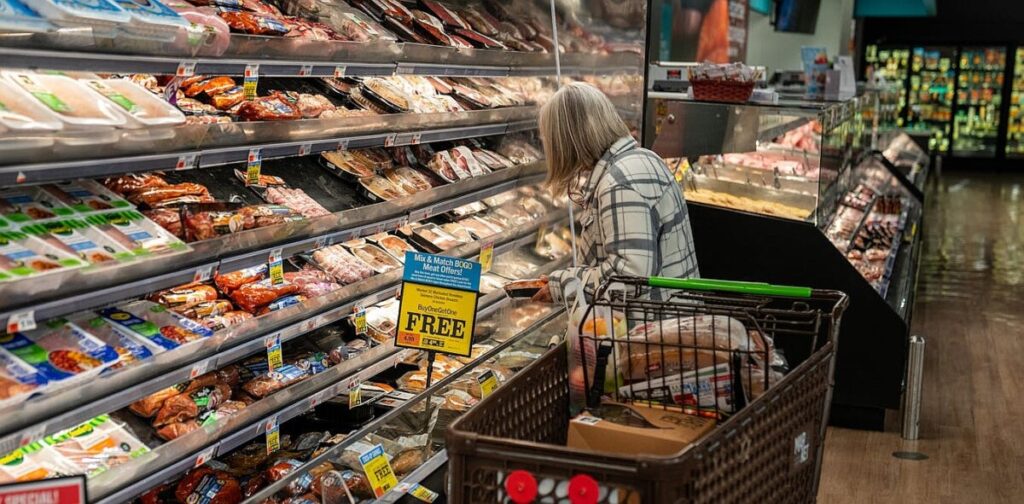
Some 42 million Americans rely on SNAP benefits to put food on the table.
Robert Nickelsberg/Getty Images News
The
Supplemental Nutrition Assistance Program
has helped low-income Americans buy groceries for decades with few disruptions.
But on Nov. 1, 2025, the
federal government halted the flow of funds
to states to distribute as SNAP benefits. The Trump administration blames this unprecedented disruption on the federal government shutdown, which
began a month earlier
. Following
multiple court orders
, federal officials said they
plan to distribute at least a portion
of the US$8 billion that’s supposed to flow monthly to the states to cover the costs of the program’s benefits. On Nov. 6, another
judge ordered the distribution of all SNAP funds
that were due in November.
Although the program costs billions, the benefits that families and individuals can receive from it are modest. The most a
person living on their own can get is $298 a month
, but many people receive far less. The
average benefit is an estimated $6.17 daily
– which falls below some
estimates of the minimum cost of eating a nutritious diet
in the United States.
The Conversation U.S. asked Tracy Roof, a political scientist who has
researched the history of government nutrition programs
, to explain who SNAP helps, how enrollment varies from state to state and what the program costs to run.
How many Americans are enrolled in SNAP?
The number of people getting SNAP benefits
soared during the Great Recession
, a big downturn that began in December 2007 and had long-lasting effects on the economy.
Because of high unemployment and poverty rates, more people were eligible for SNAP during those years. Many states, eager to bring dollars into their economies from federally funded SNAP benefits, made
unprecedented efforts
to enroll eligible families. SNAP enrollment
peaked in 2013 at roughly 15% of Americans
. The number of the program’s participants fell as the economy recovered, but never returned to pre-recession levels because a greater share of eligible families continued to enroll in the program after the economic crisis than before.
When the COVID-19 pandemic upended the U.S. economy in 2020, the number of people with SNAP benefits soared again. President Donald Trump has
blamed high enrollment in SNAP on the Biden administration
“haphazardly” handing benefits “to anyone for the asking.”
That assertion is misleading. While the Biden White House increased benefits, it did not expand who was eligible for SNAP. In fact,
President Joe Biden agreed to apply work requirements
and time limits to more SNAP recipients. Moreover, states, not the federal government, are primarily responsible for determining eligibility and enrolling people in SNAP. The number of people who received SNAP benefits during Biden’s presidency never exceeded
43 million – the peak reached
in September 2020 during the first Trump administration.
The number of people using SNAP benefits to buy groceries has not fallen substantially because the
number of people in poverty
and
the cost of living
, including what Americans pay for food, have both increased since 2020.
How much does the program cost the federal government?
In inflation-adjusted 2024 dollars, spending peaked at $128 billion in 2021 and
fell to $100 billion in 2024
– nearing pre-pandemic levels.
The program’s spending had previously increased significantly during the Great Recession because SNAP enrollment rose and
benefits were temporarily
increased. Spending declined as the economy gradually recovered.
While the number of people on SNAP during the pandemic and its aftermath never reached the peak of the Great Recession, the level of spending did reach much higher levels. This was because of three steps taken to increase benefits by more sizable amounts than during the Great Recession.
The Families First Act, which
Trump signed into law
in March 2020, offered “
emergency allotments
” that increased monthly benefits for many households receiving SNAP.
Biden extended
emergency benefits to all households enrolled in the program in April 2021, driving spending even higher. Budget legislation that Congress passed in December 2022 ended the
emergency benefits
in February 2023.
Biden signed two pieces of
legislation in 2021
that temporarily increased the maximum SNAP benefit by 15% through September 2021 – the height of the pandemic’s effects on the economy.
The
Biden administration adjusted
the basis for calculating monthly benefits in October 2021, just as the temporary increase was expiring. That change permanently increased benefits.
Most households getting SNAP benefits include children and older people
Nearly 60% of Americans enrolled in SNAP are either children under 18 or adults who are 60 or older.
About
1 in 5 non-elderly adults with SNAP benefits
have a disability.
Less than 10%
of all the people receiving SNAP benefits are
able-bodied adults without children
who are between the ages of 19 and 49.
Around 55% of all families with children
that receive SNAP benefits include at least one employed adult.
Enrollment ranges widely from state to state
In some states, 1 in 5 people receive SNAP benefits. In others, it’s 1 in 20.
The share of a state’s population getting SNAP is determined both by its poverty rate and its policies. Those policies
can affect who is eligible
and the share of eligible families and individuals who enroll in the program.
Of the 10 states with the highest percentage of people on SNAP, five are also in the top 10 for the percentage of the
population in poverty
: New Mexico, Louisiana, Oklahoma, West Virginia and Nevada.
According to 2022 data, nine of those 10 states have
enrolled nearly all
families who are eligible for SNAP benefits: New Mexico, Louisiana, Oregon, Oklahoma, West Virginia, Massachusetts, Nevada, Pennsylvania and Illinois.
States vary widely in terms of the percentage of eligible families who obtain SNAP benefits. In the bottom quarter of states,
fewer than 81% of eligible residents
in 2022 were getting benefits. The percentage in Arkansas was the lowest: 59%.
States with the highest enrollment numbers tend to make it easier for their residents to get SNAP benefits by
minimizing red tape
and engaging in
more outreach
to eligible families. They also adopt
policies that allow
some people to qualify for SNAP at higher incomes or with more assets.
Americans of all races and ethnic backgrounds rely on SNAP
A little
over 35% of people who get SNAP benefits are white
, more than any other racial or ethnic group. Around 26% are Black and 16% are Hispanic.
Although more white people are enrolled in SNAP, Census data shows that greater percentages of Black and Hispanic people get these benefits: 24.4% of Black people and 17.2% of Hispanic people compared with 9.7% of white people. This is because these groups are disproportionately poor.
Undocumented immigrants are not eligible for SNAP. Only
4.4% of SNAP recipients
in the 2023 fiscal year were immigrants who were not citizens but legally present in the U.S., such as refugees.
The “big” tax-and-spending package Trump signed into law on July 4, 2025, however,
ended SNAP eligibility for most of those immigrants
.
Tracy Roof does not work for, consult, own shares in or receive funding from any company or organization that would benefit from this article, and has disclosed no relevant affiliations beyond their academic appointment.


