The DNA Helix Changed How We Thought About Ourselves
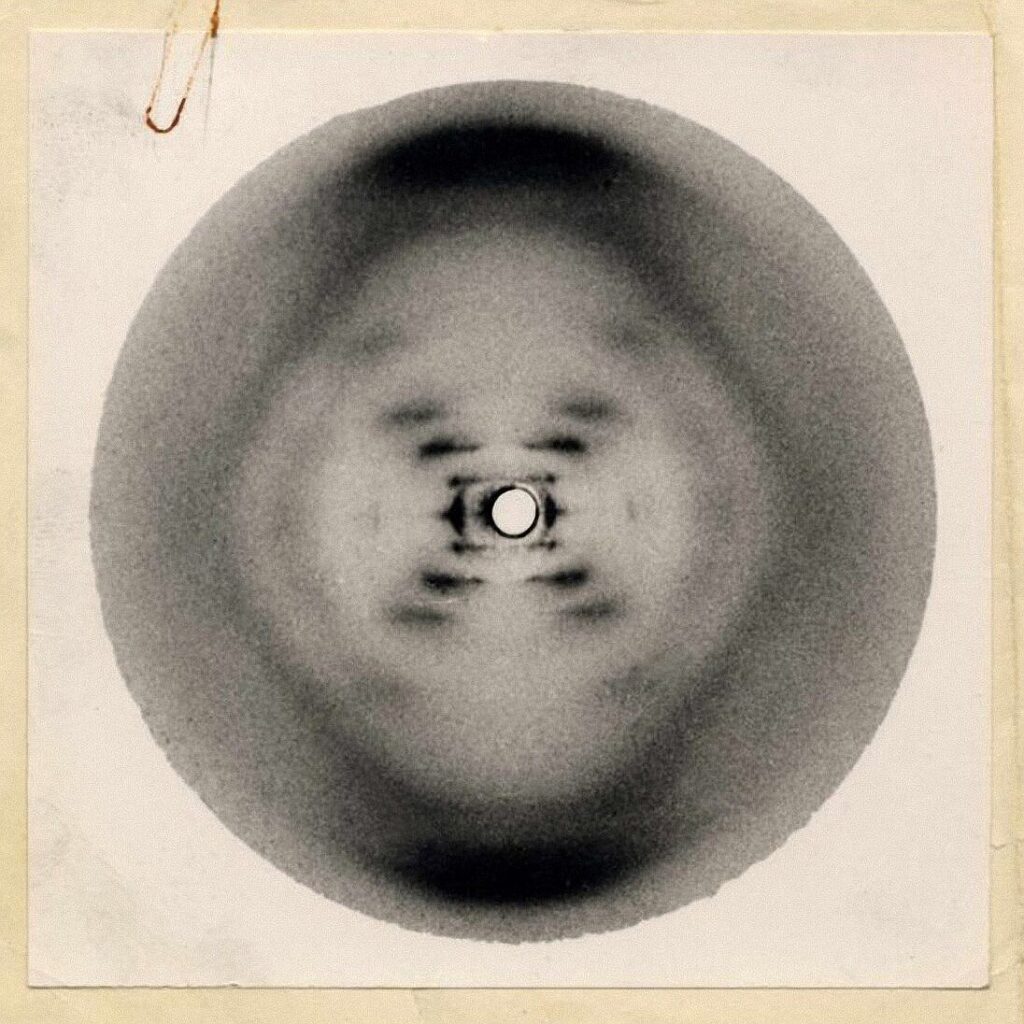
In the early 1950s, the scientific community was on the brink of a revolutionary discovery that would change our understanding of genetics forever: the structure of DNA. At the forefront of this groundbreaking research was Rosalind Franklin, a brilliant chemist and X-ray crystallographer whose meticulous work laid the foundation for the eventual identification of the double helix structure by James Watson and Francis Crick. In 1952, Franklin produced a series of X-ray diffraction images of DNA, most notably Photograph 51, which revealed critical information about the molecule’s helical structure. Her technique involved directing X-rays at crystallized DNA, allowing her to capture patterns that indicated the arrangement of atoms within the molecule.
Franklin’s contributions, however, were largely overlooked during her time. Watson and Crick, who were working at the University of Cambridge, came across her X-ray images without her consent while collaborating with Maurice Wilkins, a colleague of Franklin’s at King’s College London. The insights gleaned from Franklin’s work were pivotal; they provided the essential clues that helped Watson and Crick formulate their model of DNA as a double helix, with two strands running in opposite directions and connected by base pairs. This model not only explained how genetic information is stored and transmitted but also set the stage for modern molecular biology. Despite their eventual Nobel Prize recognition in 1962, Franklin’s role in this scientific triumph remained largely unacknowledged until many years later, prompting discussions about gender bias in science and the importance of recognizing all contributors to major discoveries.
The story of Rosalind Franklin is a poignant reminder of the complexities of scientific collaboration and credit. While Watson and Crick are often celebrated as the primary discoverers of DNA’s structure, Franklin’s pioneering work was indispensable. Her meticulous attention to detail and innovative use of X-ray crystallography not only advanced the understanding of DNA but also opened new avenues in biochemistry and genetics. Today, Franklin is recognized as a trailblazer for women in science, and her legacy continues to inspire future generations of scientists. The narrative surrounding her contributions highlights the need for equitable recognition in scientific endeavors and serves as a testament to the collaborative nature of scientific discovery, where many voices contribute to the unfolding of knowledge.
The x-ray crystallography by Rosalind Franklin in 1952 that assisted James Watson and Francis Crick in their discovery of the structure of DNA.


