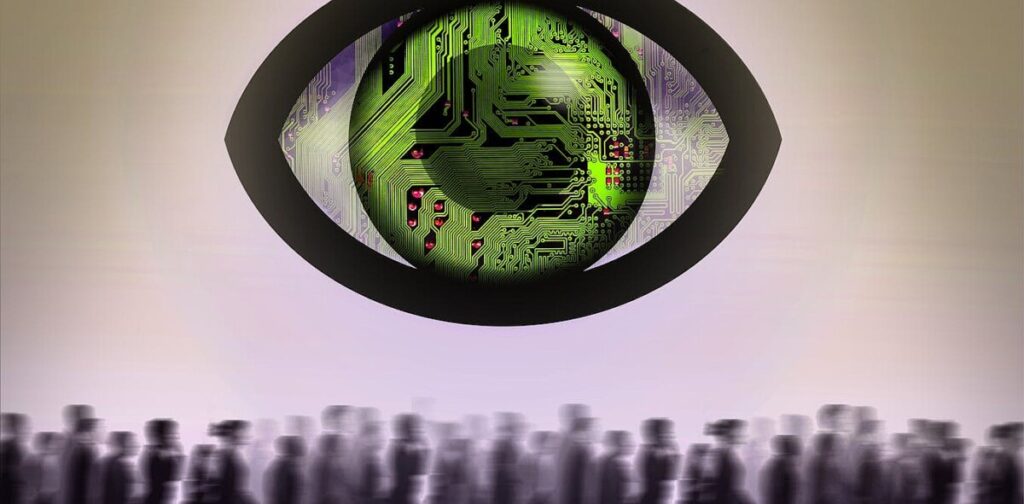
Always watching: How ICE’s plan to monitor social media 24/7 threatens privacy and civic participation
In a significant shift in immigration enforcement strategy, U.S. Immigration and Customs Enforcement (ICE) has announced plans to implement a comprehensive social media monitoring program. As outlined in a recent request for information, ICE seeks private-sector contractors to monitor a wide array of platforms—including Facebook, Instagram, TikTok, and more—transforming public social media posts into actionable intelligence for enforcement purposes. This initiative marks a crucial evolution in the agency’s approach, moving the focus of immigration enforcement from traditional physical checkpoints to the digital realm, where millions of users interact daily. The proposed monitoring program would employ a tiered system prioritizing high-risk individuals, with analysts required to produce detailed reports for ICE field offices under tight deadlines, sometimes as short as 30 minutes for urgent cases.
The implications of this initiative extend far beyond the targeted individuals. While ICE claims the program will focus on those linked to ongoing investigations or potential threats, the reality is that the surveillance net could ensnare friends, family, and acquaintances of flagged individuals. Previous experiences with similar technologies reveal a troubling pattern of mission creep, where tools designed for specific purposes expand their scope to monitor broader populations. Current ICE practices already include the use of social media monitoring tools like SocialNet and partnerships with data brokers to access extensive datasets. This new program would further integrate social media data with various other data points—including location and biometric information—into systems like Palantir Technologies’ Investigative Case Management system, thereby creating a comprehensive digital profile of individuals.
Critics warn that the privatization of data interpretation and the rapid decision-making processes involved in this initiative pose significant risks to civil liberties. As private contractors sift through vast amounts of social media content, the potential for bias and misinterpretation grows, raising serious questions about due process and accountability. The chilling effect of constant surveillance may deter individuals from expressing themselves freely online, particularly among immigrant communities and activists, who may fear that their posts could be misconstrued as evidence of wrongdoing. The ongoing debate surrounding ICE’s surveillance capabilities highlights the urgent need for transparency, independent oversight, and legislative measures to protect citizens’ rights in an increasingly monitored digital landscape. As ICE moves forward with this initiative, the boundaries between immigration enforcement and everyday life continue to blur, potentially redefining how personal privacy is understood in the digital age.
https://www.youtube.com/watch?v=kgJC_6YjypU
ICE’s surveillance gaze is likely to sweep across millions of people’s social media posts.
Westend61/Westend61 via Getty Images
When most people think about immigration enforcement, they picture border crossings and airport checkpoints. But the new front line may be your social media feed.
U.S. Immigration and Customs Enforcement has published a
request for information
for private-sector contractors to launch a
round-the-clock social media monitoring program
. The request states that private contractors will be
paid to comb through
“Facebook, Google+, LinkedIn, Pinterest, Tumblr, Instagram, VK, Flickr, Myspace, X (formerly Twitter), TikTok, Reddit, WhatsApp, YouTube, etc.,” turning public posts into enforcement leads that feed directly into ICE’s databases.
The request for information reads like something out of a cyber thriller: dozens of analysts working in shifts, strict deadlines measured in minutes, a tiered system of prioritizing high-risk individuals, and the latest software keeping constant watch.
I am
a researcher
who studies the intersection of data governance, digital technologies and the U.S. federal government. I believe that the ICE request for information also signals a concerning if logical next step in a longer trend, one that moves the U.S. border from the physical world into the digital.
A new structure of surveillance
ICE already
searches social media
using a service called
SocialNet
that monitors most major online platforms. The agency has also
contracted with Zignal Labs
for its AI-powered social media monitoring system.
The Customs and Border Protection agency
also searches social media
posts on the devices of some travelers at ports of entry, and the U.S. State Department reviews social media posts when foreigners seek visas to enter the United States.
ICE and other federal law enforcement agencies already search social media.
What would change isn’t only the scale of monitoring but its structure. Instead of government agents gathering evidence case by case, ICE is building a public-private surveillance loop that transforms everyday online activity into potential evidence.
Private contractors would be tasked with scraping publicly available data to collecting messages, including
posts and other media and data
. The contractors would be able to correlate those findings with data in commercial datasets from brokers such as
LexisNexis Accurint
and
Thomson Reuters CLEAR
along with government-owned databases. Analysts would be required to produce dossiers for ICE field offices within tight deadlines – sometimes just 30 minutes for a high-priority case.
Those files don’t exist in isolation. They feed directly into
Palantir Technologies’ Investigative Case Management system
, the digital backbone of modern immigration enforcement. There, this social media data would join a growing web of license plate scans, utility records, property data and biometrics, creating what is effectively a
searchable portrait of a person’s life
.
Who gets caught in the net?
Officially, ICE says its data collection would focus on people who are
already linked to ongoing cases or potential threats
. In practice, the net is far wider.
The danger here is that when one person is flagged, their friends, relatives, fellow organizers or any of their acquaintances can also become
subjects of scrutiny
. Previous contracts for
facial recognition tools
and
location tracking
have shown how easily these systems
expand beyond their original scope
. What starts as enforcement can
turn into surveillance
of entire communities.
What ICE says and what history shows
ICE frames the project
as modernization
: a way to identify a target’s location by identifying aliases and detecting patterns that traditional methods might miss.
Planning documents
say contractors cannot create fake profiles and must store all analysis on ICE servers.
But history suggests these kinds of guardrails often fail. Investigations have revealed how
informal data-sharing
between local police and federal agents allowed ICE to access systems it wasn’t authorized to use. The agency has repeatedly
purchased massive datasets
from brokers
to sidestep warrant requirements
. And despite a
White House freeze
on spyware procurement
, ICE quietly
revived a contract
with Paragon’s Graphite tool, software reportedly capable of
infiltrating encrypted apps
such as WhatsApp and Signal.
Meanwhile, ICE’s vendor ecosystem keeps expanding:
Clearview AI
for face matching, ShadowDragon’s
SocialNet
for
mapping networks
,
Babel Street’s
location history service
Locate X
, and
LexisNexis
for
looking up people
. ICE is also purchasing tools from surveillance firm PenLink that
combine location data with social media data
. Together, these platforms make continuous, automated monitoring not only possible but routine.
ICE is purchasing an AI tool that correlates people’s locations with their social media posts.
Lessons from abroad
The United States
isn’t alone
in government monitoring of social media. In the United Kingdom, a new police unit tasked
with scanning online discussions
about immigration and civil unrest has drawn criticism for blurring the line between public safety and political policing.
Across the globe,
spyware scandals
have shown how
lawful access tools
that were initially justified for counterterrorism were later used
against journalists and activists
. Once these systems exist, mission creep, also known as
function creep
, becomes the rule rather than the exception.
The social cost of being watched
Around-the-clock surveillance doesn’t just gather information – it also changes behavior.
Research found that visits to Wikipedia articles on terrorism
dropped sharply
immediately after revelations about the National Security Agency’s global surveillance in June 2013.
For immigrants and activists, the stakes are higher. A post about a protest or a joke can be reinterpreted as “intelligence.” Knowing that federal contractors may be watching in real time
encourages self-censorship and discourages civic participation
. In this environment, the digital self, an identity composed of biometric markers, algorithmic classifications, risk scores and digital traces, becomes a risk that follows you across platforms and databases.
What’s new and why it matters now
What is genuinely new is the privatization of interpretation. ICE isn’t just collecting more data, it is outsourcing judgment to private contractors. Private analysts, aided by artificial intelligence, are likely to decide what online behavior signals danger and what doesn’t. That decision-making happens rapidly and across large numbers of people, for the most part beyond public oversight.
At the same time, the consolidation of data means social media content can now sit beside
location and biometric information
inside
Palantir’s hub
. Enforcement increasingly happens through data correlations,
raising questions about due process
.
ICE’s request for information is likely to evolve into a full procurement contract within months, and
recent litigation
from the League of Women Voters and the Electronic Privacy Information Center against the Department of Homeland Security suggests that the oversight is likely to lag far behind the technology. ICE’s plan to maintain permanent watch floors, open indoor spaces equipped with video and computer monitors, that are staffed
24 hours a day, 365 days a year
signals that this likely isn’t a temporary experiment and instead is a new operational norm.
What accountability looks like
Transparency starts with public disclosure of the algorithms and scoring systems ICE uses. Advocacy groups such as the American Civil Liberties Union argue that law enforcement agencies
should meet the same warrant standards online
that they do in physical spaces. The Brennan Center for Justice and the ACLU argue that there should be
independent oversight
of surveillance systems for accuracy and bias. And several U.S. senators have introduced legislation to
limit bulk purchases
from data brokers.
Without checks like these, I believe that the boundary between border control and everyday life is likely to keep dissolving. As the digital border expands, it risks ensnaring anyone whose online presence becomes
legible to the system
.
Nicole M. Bennett is affiliated with the Center for Refugee Studies at Indiana University.


