Under Ron DeSantis’ leadership, Florida leads the nation in executions in 2025
In a striking turn of events, Florida has emerged as the leading state in capital punishment in 2025, executing 15 prisoners so far this year, with two more executions scheduled for November. This surge in executions marks a significant reversal from the steady decline observed in the U.S. over the past several years. Nationwide, 41 executions have taken place across 11 states, with the potential for 2025 to become the year with the highest number of executions since 2010, when 46 inmates were put to death. Florida’s current pace of executions is unprecedented in the state’s history since the reinstatement of the death penalty in 1976, with Florida executing more individuals in a single year than at any time since that landmark decision.
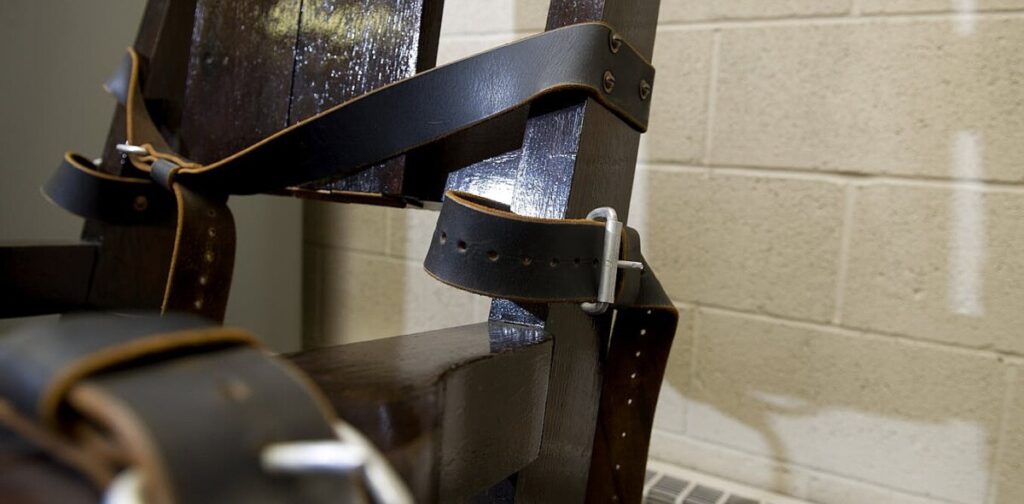
Historically, Florida has had a tumultuous relationship with the death penalty, first executing a prisoner in 1827. The state adopted the electric chair in 1923, which has been associated with several botched executions over the years. Despite these controversies and various Supreme Court rulings that have criticized Florida’s capital punishment practices, the state has made legislative changes that further streamline the execution process. Notably, in 2023, Florida eliminated the requirement for jury unanimity in death penalty cases, allowing a simple majority of eight jurors to recommend a death sentence. This change is significant as it places Florida among a small group of states with similar laws, raising concerns about the fairness and reliability of death penalty sentences.
The current wave of executions in Florida has garnered attention not only for its numbers but also for the racial disparities evident on death row. Black individuals represent 35% of Florida’s death row population, significantly higher than their 17% share of the state’s overall population. This mirrors national trends, where racial inequality remains a persistent issue within the death penalty system. Critics of Governor Ron DeSantis suggest that his aggressive stance on capital punishment may be politically motivated, as he seeks to bolster his tough-on-crime image ahead of potential national aspirations. As Florida continues to lead the nation in executions, it raises critical questions about the future of the death penalty in America and the ethical implications of its current trajectory.
Florida has executed 15 prisoners in 2025 so far, with two more executions scheduled for November.
MediaNews Group/Reading Eagle via Getty Images
After years of
steady decline in the number of people executed in the United States
, there has been a sharp reversal in 2025.
So far this year,
41 people have been killed
in 11 states, with five more executions
scheduled before the end of the year
.
If all the scheduled executions are carried out, that would make 2025 the year with the most executions since 2010, when
46 inmates were put to death
. That year, Texas led the way with 17 executions, while Florida carried out only one.
But this year, the Sunshine State is leading the charge. Florida
has executed 15 prisoners in 2025
– the most ever in a single year since 1976, when a brief national moratorium on the death penalty was lifted. Two of the five remaining executions scheduled for 2025 are set to happen in Florida. Texas and Alabama are tied for a distant second, with five executions each.
As someone who
has studied the death penalty for decades
, what is happening in Florida right now seems to me to be especially important. While in some ways the state is distinctive, in many others it is a microcosm of America’s death penalty system.
The history of the death penalty in Florida
According to the Death Penalty Information Center, Florida
carried out its first execution in 1827
, 18 years before it became a state.
Almost 100 years later, in 1923, Florida
replaced hanging with the electric chair
as its method of execution. After a brief pause in the use of capital punishment in the 1970s, it was one of the first states to get back in the death penalty business.
In the 1990s, the state
had several gruesome botched electrocutions
. In three cases, the condemned man caught on fire before dying in the chair. To this day, the electric chair
remains legal
in Florida, though in 2000 the state Legislature enacted a law whereby
prisoners may choose between the electric chair and lethal injection
.
Over the years, the U.S. Supreme Court has taken the state to task for various constitutional defects in its death penalty laws and practices. In its 1982 decision in Enmund v. Florida, the court ruled that Florida
could not use the death penalty
to punish people who were minor participants in a crime that led to a murder. And in 2014, the Supreme Court found that Florida was unconstitutionally
denying the kind of intellectual disability claims
by people with low IQ scores that made them ineligible to be given death sentences.
But these rulings have not stopped the state from continuing to go its own way in death penalty cases. In 2020, the Florida Supreme Court
ended the practice of having a court review
capital sentences. This review was meant to ensure that those sentences met the U.S. Constitution’s requirements that they be meted out only in cases that truly warrant them and that they be proportional. To determine proportionality, the court undertaking such a review would
compare the case in front of them
with similar cases in the same jurisdiction in which the death penalty had been imposed.
Then in 2023, Florida enacted legislation
ending the requirement of jury unanimity
in death cases. Now, it takes only eight out of 12 jurors to send someone to death row. Only three other death penalty states
do not require jury unanimity
. In Missouri and Indiana, a judge may decide if the jury’s decision isn’t unanimous, and in Alabama, a 10-2 decision is sufficient.
Racial inequality on death row
As in the rest of the country,
racial discrimination has long been a feature
of Florida’s death penalty system.
Thirty-five percent of the 278 people currently on Florida’s death row
are Black
. But Black people make up only about
17% of Florida’s overall population
.
This is actually lower than the
approximately 40%
of inmates on death row who are Black nationwide, despite the fact that Black people make up just
14% of the U.S. population
.
Across the nation, 13 of the 41 inmates executed so far in 2025 have been Black or Latino men.
Florida leads the nation in the number of people – 30 – who have been sentenced to death
only to be exonerated later
. Of those,
57% were Black
.
A record-setting year
Today, Florida has the
second-largest death row population
in the United States, with 256 inmates awaiting executions. Only California has more, with
580 inmates on death row
, but it has had a moratorium on executions since 2006.
As Florida’s governor, Ron DeSantis is
responsible for issuing death warrants
. In 2025, he has signed a record-setting 15 so far. That’s the most death warrants in the state in a single year since 2014, when Gov. Rick Scott signed off on
putting eight people to death
.
Though he is Catholic, DeSantis does not subscribe to
the church’s staunch opposition
to the death penalty. The Florida Catholic Conference of Bishops
has been outspoken
in taking him to task for his position on capital punishment and for presiding over an execution spree. But that has not stopped him.
Critics of Florida Gov. Ron DeSantis, seen here speaking during the 2024 Republican National Convention, allege that his record-setting number of executions in 2025 is a bid for attention on the national political stage.
Matt Rourke/AP Photo
Indeed, on Nov. 3, 2025, the governor said that capital punishment is “
an appropriate punishment for the worst offenders
.” He added that it could be a “strong deterrent” if the state carried out executions more quickly.
DeSantis has served as governor since 2019, and prior to 2025, he had signed nine death warrants. He says that he was
focused on other priorities
early in his term and during the COVID-19 pandemic.
The governor, who is term limited, is
in his second and last term
. DeSantis’ critics allege that the recent uptick in executions is an attempt to garner attention and prove his tough-on-crime bona fides
to a national audience
.
Florida: Setting the trend, or bucking it?
The total number of executions in the U.S. went from a high of 98 executions in 1999 to a low of 11 in 2021. But that number
has increased every year since
.
While only one state, Indiana, has
resumed executions after a long hiatus
, no other state has increased its use of the death penalty as quickly as Florida has. Elsewhere, the common pattern of allowing people
to languish on death row for decades
, and in some states seemingly permanently, has held.
And although the problems that have long plagued Florida’s death penalty system remain unaddressed, it now stands alone in dramatically escalating its own pace of executions and is
leading America
to its own 2025 execution revival.
Read more stories from The Conversation about
Florida
.
Austin Sarat does not work for, consult, own shares in or receive funding from any company or organization that would benefit from this article, and has disclosed no relevant affiliations beyond their academic appointment.


