The DNA Helix Changed How We Thought About Ourselves
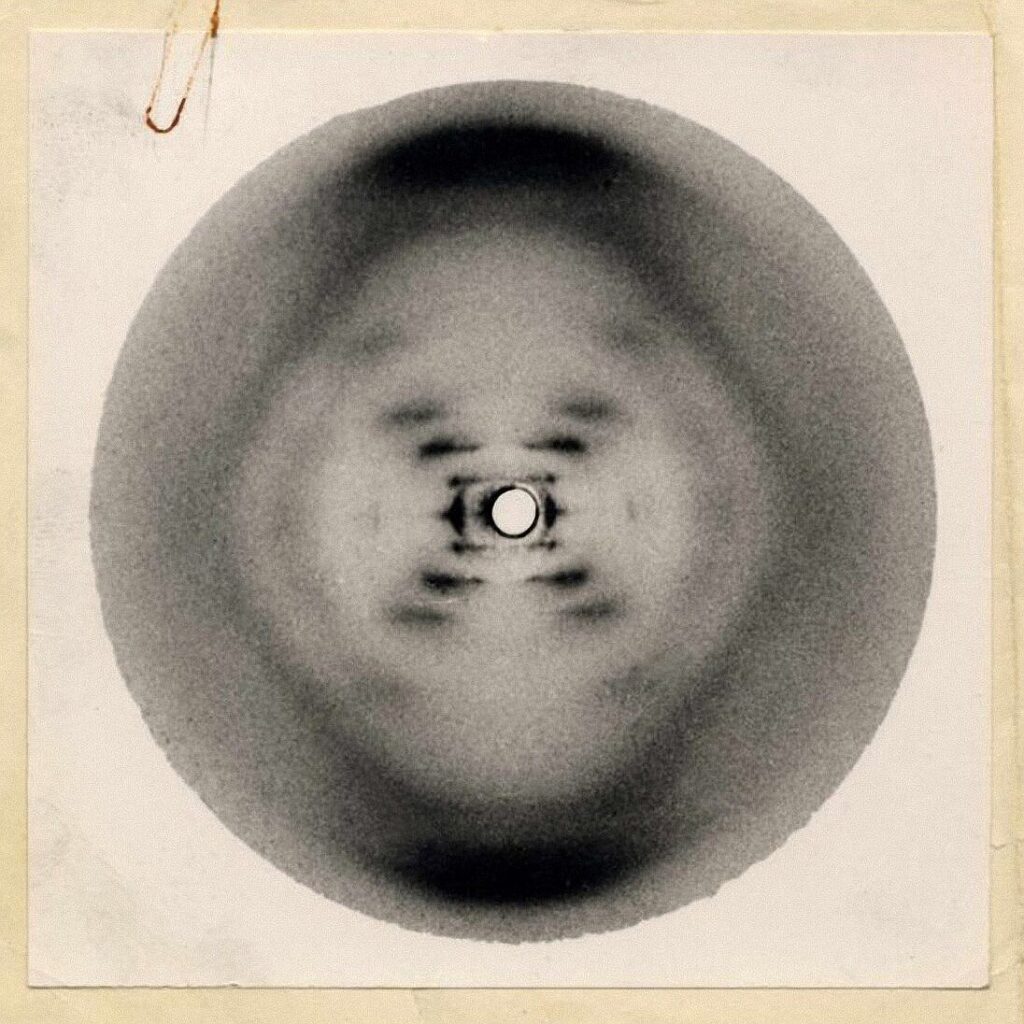
In 1952, Rosalind Franklin’s pioneering work in x-ray crystallography played a crucial role in unraveling the structure of DNA, a discovery that would transform the field of molecular biology. Franklin, a talented chemist and X-ray diffraction expert, meticulously captured images of DNA fibers that revealed critical information about its helical structure. Her famous photograph, known as Photo 51, showcased a distinctive X-shaped pattern, indicating that DNA was likely a double helix. This groundbreaking image not only provided essential insights into the molecular architecture of DNA but also laid the groundwork for subsequent research.
While Franklin’s contributions were significant, they were largely overshadowed by the later achievements of James Watson and Francis Crick. In 1953, using Franklin’s data without her direct knowledge or consent, Watson and Crick developed their double helix model of DNA, which elegantly explained how genetic information is stored and replicated. Their model illustrated how the bases of the DNA strands pair specifically—adenine with thymine and cytosine with guanine—facilitating the understanding of heredity and the mechanisms of genetic inheritance. Despite the controversy surrounding the use of Franklin’s work, her x-ray crystallography provided the empirical foundation for Watson and Crick’s theoretical model.
The legacy of Rosalind Franklin’s contributions extends beyond the discovery of DNA’s structure; it highlights the importance of collaboration and recognition in scientific research. Franklin’s meticulous approach and her ability to capture complex molecular images not only advanced our understanding of genetics but also paved the way for future scientific breakthroughs. Today, Franklin is celebrated as a key figure in the history of science, and her story serves as a reminder of the often-overlooked contributions of women in the scientific community. Her work exemplifies the intersection of innovation, perseverance, and the quest for knowledge, ultimately shaping the future of genetics and molecular biology.
The x-ray crystallography by Rosalind Franklin in 1952 that assisted James Watson and Francis Crick in their discovery of the structure of DNA.


