NASA has a broken giant antenna that could upend its 2026 plans
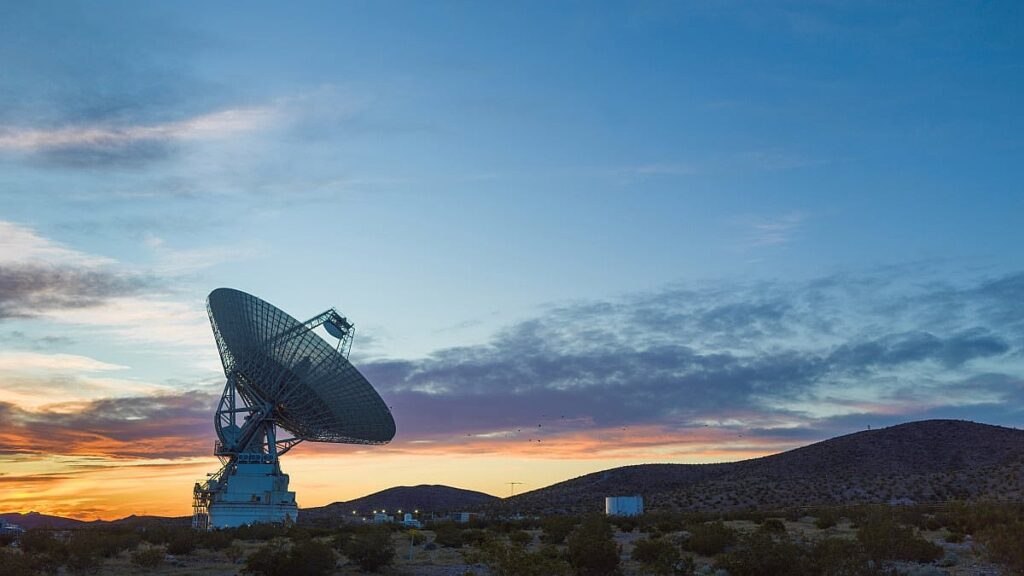
NASA’s Deep Space Network (DSN) is currently facing significant disruptions due to equipment failures affecting its iconic Mars Antenna, located near Barstow, California. This massive 230-foot-wide radio dish, which has been pivotal in space exploration since its inception in 1966, broke down on September 16, 2023, after over-rotating during operations. This malfunction strained crucial cables and pipes, leading to further complications including flooding from damaged fire suppression hoses. In response, NASA has initiated a formal investigation to determine the cause of the damage, and while engineers work on repairs, the antenna remains offline, halting vital communications with spacecraft and delaying studies of near-Earth asteroids.
The timing of this failure is particularly concerning, as it coincides with the ongoing federal government shutdown, which has limited NASA’s ability to communicate effectively about the situation. As the shutdown shows signs of resolution, the agency has begun to share limited updates, but the repair timeline for the antenna is still uncertain. This outage poses a risk to upcoming missions, particularly Artemis II, which is scheduled to orbit the moon next year. The DSN has been crucial for previous missions, including Artemis I, which required extensive support from the network. Historically, the DSN has been the backbone of NASA’s deep-space communications, managing over 40 missions and facilitating groundbreaking explorations, from the Voyager missions to asteroid studies.
The Mars Antenna is not only the largest dish at the Goldstone Complex but also serves as the world’s most sensitive planetary radar, essential for tracking and imaging near-Earth asteroids. Following the collapse of the Arecibo Observatory in 2020, the Mars Antenna has taken on an increased role in radio astronomy, detecting over 200 near-Earth asteroids, with many classified as potentially hazardous. With all scheduled asteroid observations canceled at least through the end of the year, the implications of this outage are significant. As NASA works to restore functionality, the agency is also looking to the future, planning enhancements to the DSN infrastructure, including the addition of six new dishes to better support its growing mission demands. The situation underscores the fragility of the network and the urgent need for upgrades to accommodate the increasing data flow and mission complexity in the realm of space exploration.
Equipment failures in
NASA
‘s Deep Space Network have disrupted spacecraft communications and stalled near-Earth
asteroid
studies for nearly two months.
As the federal government remains shut down, engineers are racing to restore the
space
agency’s historic 230-foot-wide radio dish near Barstow, Calif. The massive dish, about the size of a Boeing 747 jet, broke down on Sept. 16.
Known since 1966 as the Mars Antenna for receiving the first signals from a spacecraft closely observing the Red Planet, the giant dish over-rotated during operations, straining cables and pipes at its center. Damaged hoses from the fire suppression system also caused flooding, though the water damage was quickly abated, according to NASA in a statement to Mashable.
NASA has established a formal mishap investigation board to examine what led to the antenna’s damage.
“The antenna remains offline as the board members, engineers, and technicians evaluate the structure and make recommendations and repairs,” said Ian O’Neill, a NASA Jet Propulsion Laboratory spokesperson. “There is no danger to the public.”
Due to the shutdown, NASA employees could not respond to questions for weeks. But as a Senate vote signaled progress toward reopening the government, the agency began providing limited information to Mashable’s inquiry.
SEE ALSO:
NASA astronaut class appears to be first without Black recruits in 40 years
The repair timeline remains unclear, leaving open the question of how the outage may affect preparations for
Artemis II
, a 10-day crewed mission that will orbit the moon as early as next year. Its predecessor,
Artemis I
, needed more than 900 hours of Deep Space Network support in 2022 and
briefly lost contact
during flight, underscoring the system’s fragility.
Founded in 1963, NASA’s Deep Space Network is the world’s largest and most powerful system for communicating with spacecraft. It commands and monitors
more than 40 missions
, with more on the way. The network’s three antenna complexes — in California, Spain, and Australia — work around the clock so that at least one site can always reach spacecraft as Earth turns.
Upon the network’s
50th anniversary
in 2013, Al Bhanji, who used to manage it, explained how crucial the system had been for practically everything NASA had undertaken in space.
“Without the DSN, we would never have been able to undertake voyages to Mercury and Venus, visit asteroids and comets,” Bhanji said then. “We’d never have seen the stunning images of robots on Mars, or close-up views of the majestic rings of Saturn.”
It’s no secret in the aerospace community that the network is overburdened. The NASA inspector general, who acts as the federal watchdog over the agency, has
pressed for upgrades
to the aging infrastructure. Over the past 30 years, data flowing through it has increased sharply, exceeding what the system was built to handle by 40 percent. Under NASA’s Deep Space Network Aperture Enhancement Program, the agency is adding six dishes, including a new
112-foot-wide antenna
in California slated to go online in 2026.
The damaged Mars Antenna is the largest dish at the Goldstone Complex in California, capable of tracking spacecraft traveling
tens of billions of miles
from Earth. It was expanded to its current size in 1988 to support the
Voyager 2
mission, which has since exited the solar system, along with
Voyager 1
.
As the world’s most sensitive planetary radar, the dish is also used to “ping” near-Earth asteroids. This allows scientists to determine an asteroid’s position and speed, giving them the ability to estimate a rock’s trajectory, crucial for tracking asteroids that could potentially slam into Earth. Researchers can also use the radar to “image” the objects. Though most asteroids are studied with optical telescopes, radar images can provide information about the physical properties of the rocks, like their
shapes and sizes
.
Under NASA’s Deep Space Network Aperture Enhancement Program, the agency is adding six dishes, including a new 112-foot-wide antenna in California slated to go online in 2026.
Credit: NASA / JPL-Caltech
After the
Arecibo Observatory
in Puerto Rico collapsed in 2020, the NASA dish ramped up its radio astronomy to fill the void. Since then, the Mars Antenna has detected over
200 near-Earth asteroids
. At the end of last year, more than half had been classified as “potentially hazardous.”
It’s uncertain how long the antenna will remain out of service, but all of its scheduled asteroid observations have been canceled at least through the end of this year.
“NASA will provide information on the board’s findings and next steps to the antenna’s service after the federal government reopens,” a spokesperson said.
Though
failures in the network
of this kind are rare, the legendary antenna in the Mojave desert has survived setbacks in the past. In 2014, a welder accidentally dropped a handrail while conducting maintenance, for example,
puncturing a hole in the dish
. In 1992, a magnitude-7.4 earthquake also damaged the antenna, requiring repairs.