Millard: Advanced recycling could be our next tech boom
In a revealing analysis by the American Chemistry Council (ACC), the future of the U.S. economy may hinge on a new frontier: advanced recycling. This innovative approach to recycling could transform how the nation handles plastic waste, potentially generating billions in economic activity and creating over 173,000 jobs. ACC President Ross Eisenberg emphasizes that the key to unlocking this potential lies in viewing recycling as a manufacturing opportunity rather than merely a waste management problem. Current mechanical recycling methods are limited in scope, often leaving many types of plastics, such as films and synthetic textiles, to languish in landfills. Advanced recycling, however, offers a solution by breaking plastics down into their molecular components, allowing for the creation of new plastics suitable for a wide range of applications, including food and pharmaceutical-grade products.
The ACC’s report highlights the significant economic implications of embracing advanced recycling technologies, which have already attracted billions in private investment. A Government Accountability Office report from 2021 supports this vision, noting that chemical recycling can yield raw materials of virgin quality while reducing reliance on fossil fuels. The ACC estimates that widespread adoption of advanced recycling could contribute an impressive $48.7 billion to the economy annually, equating to the economic impact of the U.S. milk industry. Yet, Eisenberg warns that the primary challenge now lies in navigating the regulatory landscape. He calls for a consistent national framework that recognizes advanced recycling as a manufacturing process, which would encourage investment and innovation in the sector.
Despite the promising outlook, the plastics industry faces significant skepticism from environmental groups and lawmakers, with critics arguing that current recycling efforts are inadequate. Organizations like Greenpeace USA have pointed out that a minimal percentage of plastics are effectively recycled, while calls for bans on single-use plastics continue to grow. The ACC contends that the industry has evolved, with new technologies designed to enhance recyclability built into product design from the outset. Eisenberg underscores the dual focus of this initiative: not only does it aim to improve environmental outcomes, but it also seeks to bolster job creation and economic growth. As the U.S. stands at the crossroads of innovation and sustainability, the push for advanced recycling could redefine the relationship between technology, the economy, and the environment.
Welcome to the economic future of the United States: Big Tech, Big Data — and Big … Recycling?
That’s the conclusion of a new analysis from the American Chemistry Council (ACC), which says that if America dominates the coming advanced recycling industry the same way it has dominated technology, the results could be billions in economic activity and tens of thousands of jobs.
The technology needed for the advanced recycling revolution is here, says ACC President Ross Eisenberg. What’s needed is a new mindset. “Recycling is really manufacturing.”
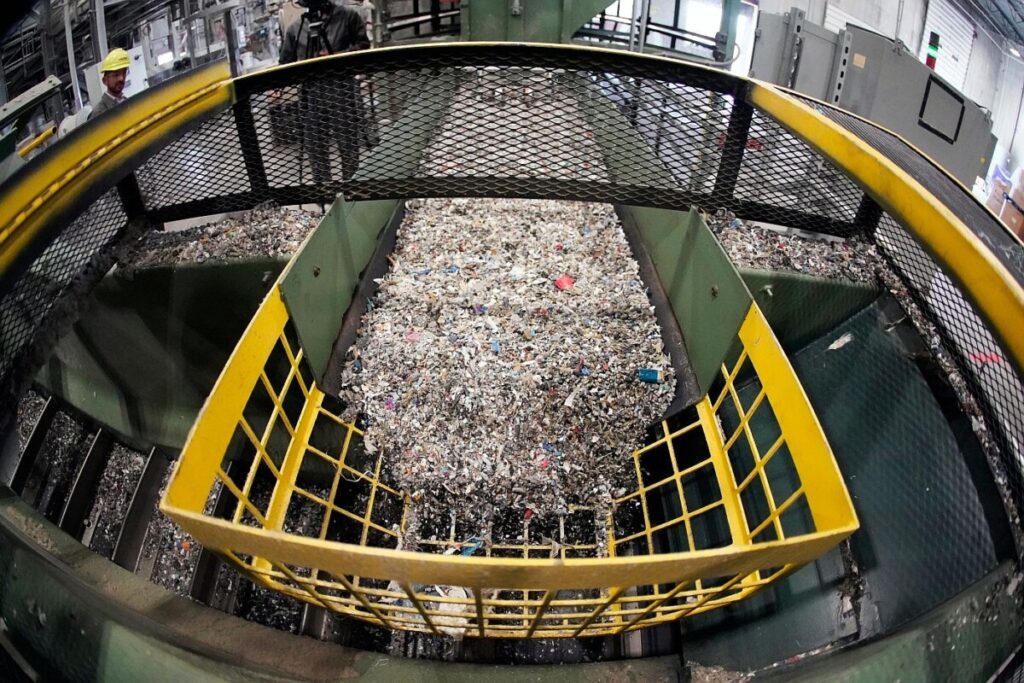
Instead of looking at used plastics as a problem to be solved, he says, they should be seen as a resource to be monetized. That can’t happen at most of the 245 plastic recycling facilities nationwide, which use mechanical recycling processes that involve sorting, cleaning, shredding, melting and remolding plastic.
“Mechanical recycling is tried and true,” Eisenberg said, but it can’t handle many of the most common forms of plastic. “The films, the pouches, the tubes, the synthetic textiles — they still end up in landfills because the existing recycling infrastructure we have here in the U.S. just can’t handle them.”
That’s where advanced recycling comes in. Unlike mechanical recycling, advanced recycling turns plastics into a gas or liquid raw material — “reducing them back to molecules,” Eisenberg says — which can then be turned into “brand-new plastics for use in virtually any product or packaging type, including food- and pharmaceutical-grade plastics.”
Similar to the way the mining industry supplies raw materials that are turned into consumer products, recycling plastic into its raw form can supply industries with raw materials while removing massive amounts of plastic from the waste stream.
The private sector has embraced the concept, with billions of dollars being invested in advanced recycling technology, according to ACC.
A 2021 Government Accountability Office report touted the technology. “Chemical recycling can produce raw materials of virgin quality, thereby decreasing demand for fossil fuels and other natural resources,” the report states. “Developing advanced recycling technologies could promote domestic business and employment. Chemical recycling creates a market for plastic waste and a new way to reuse some plastics.”
The ACC analysis suggests that widespread use of advanced recycling would create 173,200 jobs with a total annual payroll of $12.8 billion. It could also add $48.7 billion in total economic output — the combined value of goods and services produced directly and indirectly as a result.
“Essentially the same economic contributions annually of the milk industry in the United States,” Eisenberg said.
The challenge is no longer technology, but regulation, Eisenberg says. Calling the current political landscape a “plethora of regulatory barriers,” he urged state and federal governments to consider the advanced recycling of plastics as manufacturing instead of waste incineration. Any plastic produced through this process would be subject to recycling regulations.
“We think that would really help unlock some of the private investment that has been waiting to go,” he said.
The ACC is calling for a consistent national framework with clear standards, funding, incentives, infrastructure build-up and public education. Eisenberg said those standards would help with the recycling process and recycled materials, along with waste reduction.
The plastics industry still faces plenty of skepticism from environmental groups and lawmakers. Organizations such as Greenpeace USA have claimed very little plastic is being recycled, and the World Wildlife Fund has called for a ban on single-use plastic cups and cutlery by the end of the year. More than 500 U.S. communities have banned single-use plastic bags, and a dozen states have done likewise.
According to Environmental Protection Agency data, 32% of disposable items are recycled annually. Raising that rate to the EPA’s goal of 50% by 2030 will require major changes in how plastics are processed.
Critics are stuck in the past, Eisenberg says, adding that the plastics industry has changed. Plastic products are now designed with “end of life” in mind from the outset of production. It’s an approach that, with the aid of new technology, can promote recycling and stimulate the economy.
“Obviously, there’s an environmental component to this,” Eisenberg says. “We want to clean up the environment. But there’s also a jobs component to this, and we don’t want that to be ignored.”
Taylor Millard writes about politics and public policy for InsideSources.com.


