House speaker’s refusal to seat Arizona representative is supported by history and law
In a significant political development, Adelita Grijalva made history on September 23, 2025, by winning a special election to represent Arizona’s 7th Congressional District, becoming the state’s first Latina member of Congress. However, despite her election being formally certified by the Arizona Secretary of State, Grijalva has yet to be sworn into office due to a government shutdown. House Speaker Mike Johnson, a Republican, has claimed that the ongoing budget impasse necessitates delaying her swearing-in until normal federal operations resume. This unprecedented situation has led to a lawsuit filed by Arizona Attorney General Kris Mayes, which argues that Johnson’s refusal to administer the oath is a denial of representation for Arizona’s constituents.
The implications of this delay are profound. Grijalva’s election is not in dispute, yet her inability to assume office means she lacks access to essential resources and support that would enable her to effectively serve her over 800,000 constituents. Without the operating budget and access to legislative databases typically available to members of Congress, Grijalva has described her predicament as “having the title but none of the job.” This situation not only hampers her ability to represent her district but also raises questions about the political motivations behind the delay. Grijalva is poised to provide critical support for a bipartisan measure aimed at compelling the Trump administration to release government files related to convicted sex offender Jeffrey Epstein, making her swearing-in particularly urgent.
Historically, the Speaker of the House has had the authority to determine when newly elected members take their oaths, a power rooted in the Constitution. While the law stipulates that the oath must be administered before members can officially take their seats, the timing has varied based on circumstances. The current situation marks the longest delay in modern history for a new member’s swearing-in, drawing comparisons to past instances where political considerations influenced the timing of oath administration. As the standoff continues, Grijalva’s case highlights the intersection of governance, representation, and the political maneuvering that can occur in times of crisis, raising critical questions about the balance of power within Congress and the rights of constituents during governmental disruptions.
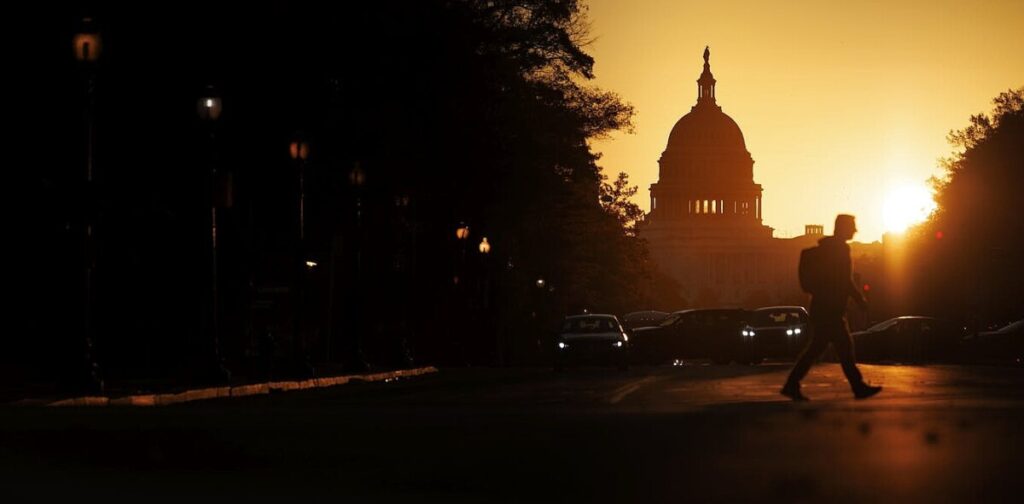
The U.S. Capitol is seen on Nov, 5, 2025.
Tom Brenner/Getty Images
Adelita Grijalva won a special election
in Arizona on Sept. 23, 2025, becoming
the newest member of Congress
and the state’s first Latina representative.
Yet, despite
the Arizona secretary of state’s formal certification of Grijalva
, a Democrat, as the winner of that election, Rep.-elect Grijalva
has not been sworn into office
.
Republican House Speaker Mike Johnson, who
by law is responsible
for making that happen,
claims the government shutdown
means
Grijalva must wait
until the federal government resumes normal operations.
In response, Arizona Attorney General Kris Mayes
filed a lawsuit
on Oct. 21 alleging that Johnson has denied the state its representation in Congress.
No one disputes that Grijalva is the next member of the House of Representatives for the 7th District of Arizona. And the House
hasn’t conducted business
since Sept. 19, when Johnson gaveled it out of session.
So why does it matter whether Grijalva is sworn in now or later?
The lawsuit filed by Mayes claims Johnson is using his power to “
strengthen his hand
” in the ongoing budget battle that has shut down the federal government. Additionally, Grijalva has pledged to
provide the last necessary signature
to force a vote on a bipartisan measure demanding that the Trump administration
release government files on convicted sex offender Jeffrey Epstein
.
But as
a law scholar
who analyzes government institutions, I recognize that the speaker historically has had power to determine when the oath is administered. And courts have
been reluctant
to weigh in the speaker’s use of that power.
The speaker’s historical power
The framers of the Constitution were divided on whether to
require members of Congress to take an oath of office
. Representing a political compromise on the issue, the
Constitution requires all Senate and House members
to take an oath to support the Constitution before assuming office. But the framers left the substance and administration of the oath up to Congress.
Congress put the
speaker of the House in charge
of administering the oath to incoming House members and first specified its text in 1789.
The Oath Act
required members of Congress to “solemnly swear or affirm” support of the Constitution.
Historically
, the speaker administered the oath to new House members state by state. This meant that each state’s newly elected representatives stood alone in front of Congress. However, in 1929, House Speaker Nicolas Longworth
changed tradition
so that all new members were sworn in at the same time.
Representative-elect Adelita Grijalva, D-Ariz., speaks at the Capitol in Washington on Oct. 15, 2025.
AP Photo/J. Scott Applewhite
Longworth did so after
Oscar DePriest
– the first African American to serve in Congress in the 20th century – won an election in Illinois to replace Rep. Martin B. Madden, who had died of a heart attack.
Longworth acted in response to speculation
that Southern Democrats would attempt to prevent a Black lawmaker from joining the House. Rather than swearing in members state by state, Longworth swore in all members at once so DePriest was not stopped from taking the oath of office.
Since that time, the speaker has administered the oath of office to all newly elected members of the House as a collective unit.
How things work now
Under current law,
the speaker must administer the oath of office
to all House members prior to them taking their seats.
Here’s how this has worked over the past few decades:
After the House elects a speaker, the member with the longest continuous service in the House – called the
dean of the House
– administers the oath to the speaker. Then the speaker administers the oath to the rest of the members all together as a mark of a new Congress.
The idea is that
despite partisan differences
, every legislator commits in front of the others to uphold the Constitution.
But occasionally, either because of illness, a special election or other circumstances, a newly elected member of Congress can’t take the oath with everyone else. When that happens, that person is sworn in at a later date.
On Sept. 9, 2025, for example, Democrat James Walkinshaw won a
special election
to succeed the late Gerry Connolly, who died in office while representing Virginia’s 11th congressional district.
Johnson swore Walkinshaw in the next day
.
While the speaker has the
responsibility
for administering the oath, the House may adopt a resolution to designate a judge or House member selected by the speaker to do the job for him.
In 1999, for example,
Speaker Dennis Hastert designated
retired California Judge Ellen Sickles James to administer the oath to Rep.-elect George Miller.
Regardless of who swears into office a member of Congress who could not attend the collective ceremony, the administration of the oath has traditionally occurred on days in which the House is session. But it
does not
have to be that way.
The law is ambiguous on when the oath is administered.
And House speakers have not always acted swiftly. In spring 2021, for instance, Speaker of the House
Nancy Pelosi waited 25 days
before administering the oath to Republican Rep.-elect Julia Letlow. That’s because the House did not have a session scheduled immediately following Letlow’s election.
Johnson has referred to this particular delay as the “
Pelosi precedent
,” setting a standard practice of the speaker waiting to administer the oath until Congress is in session.
Rep.-elect Adelita Grijalva greets supporters on Nov. 1, 2025, in Tucson, Ariz.
Rebecca Noble/Getty Images
Why does it matter?
The delay in administering Grijalva the oath is the
longest in modern history
.
While Grijalva waits, she does
not have access
to the
resources
typically provided to members of the House to help them perform their jobs, including an operating budget for her offices or even the ability to log in to key databases.
This means Grijalva is
limited in her ability
to represent her
over 800,000
constituents.
She describes her current situation as “
having the title but none of the job
.”
Grijalva, Arizona Attorney General Mayes and congressional Democrats accuse the speaker of playing politics. But history and the law suggest that may be Johnson’s prerogative until the government reopens.
Jennifer Selin does not work for, consult, own shares in or receive funding from any company or organization that would benefit from this article, and has disclosed no relevant affiliations beyond their academic appointment.


