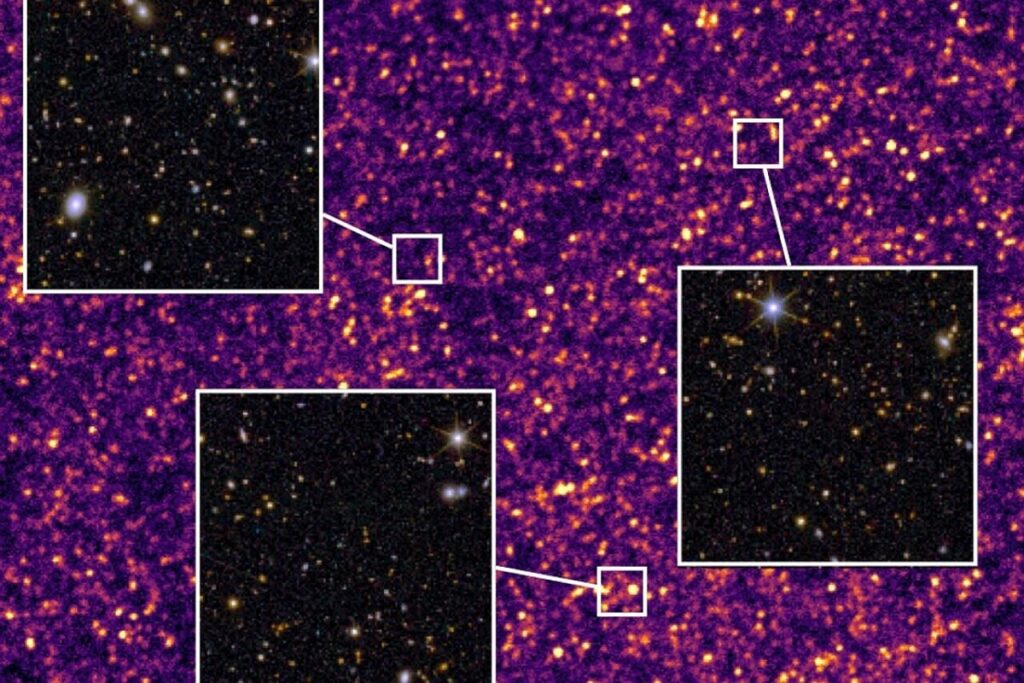
Our Universe Is Getting ‘Colder, Deader,’ Astronomers Say
Recent scientific research has introduced compelling evidence indicating that our universe may have already “passed its prime,” challenging long-held assumptions about its ongoing evolution. Traditionally, the universe has been considered an ever-expanding entity, continuously evolving through the formation of new stars and galaxies. However, a team of astrophysicists has analyzed data from various cosmic observations, revealing that the rate of star formation has significantly declined over the past few billion years. This decline suggests that we may be witnessing the latter stages of the universe’s lifecycle, with many regions becoming increasingly barren as the birth of new stars slows down.
Key findings from this research highlight that the universe’s star formation peaked around 10 billion years ago, after which it has been on a steady decline. This period of peak activity saw the formation of massive galaxies and stellar clusters, which contributed to a vibrant cosmic landscape. In contrast, current observations indicate that many galaxies are now running out of the gas necessary for star formation, leading to a phenomenon known as “galactic starvation.” For instance, the Milky Way, once a bustling hub of stellar activity, is expected to exhaust its star-forming capabilities in the next few billion years, transitioning into a quieter phase dominated by aging stars.
This shift in our understanding of the universe’s lifecycle not only alters our perception of cosmic evolution but also raises intriguing questions about the fate of our galaxy and the universe as a whole. As stars age and die, they will eventually leave behind remnants like white dwarfs, neutron stars, and black holes, leading to a universe that is increasingly dark and cold. The implications of this research extend beyond mere academic curiosity; they challenge us to reconsider our place within the cosmos and the long-term future of our universe. As scientists continue to unravel the mysteries of cosmic evolution, this new perspective invites both awe and contemplation about the ultimate fate of all celestial bodies.
https://www.youtube.com/watch?v=7JAcC7tVXLs
New evidence suggests our universe has long “passed its prime.”