Conservation and alteration of mammalian striatal interneurons
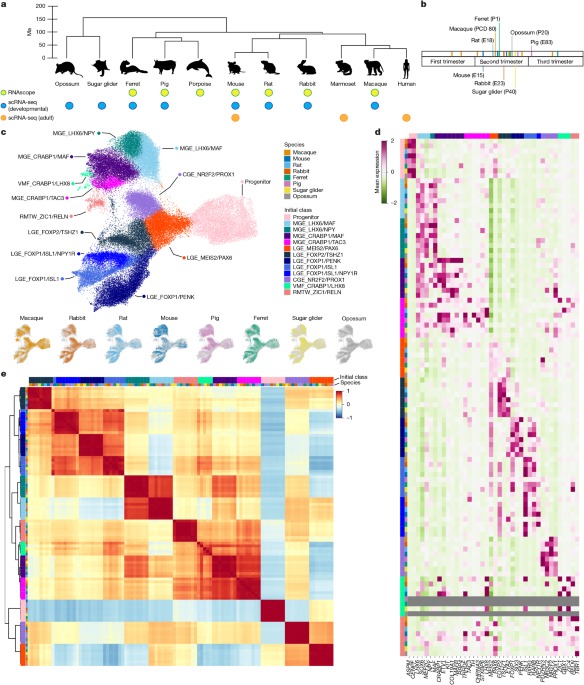
A recent study published in *Nature* has shed light on the diversity of cell types within the mammalian brain, focusing particularly on striatal interneurons. This groundbreaking research, conducted by a team of scientists, analyzed brain samples from various mammalian species at different developmental stages, both in embryos and adult specimens. The findings highlight the conserved nature of the TAC3 initial class of striatal interneurons across placental mammals, indicating a significant evolutionary relationship with the Th striatal interneurons found in rodents. This discovery not only enhances our understanding of brain development and function but also suggests that certain neural structures have remained remarkably stable throughout evolution, despite the vast array of species differences.
The study utilized advanced techniques to assess the cellular composition of the striatum, a critical brain region involved in motor control and cognitive functions. By comparing samples from multiple species, the researchers were able to identify specific interneuron classes and trace their evolutionary lineage. The conservation of the TAC3 class across placental mammals underscores the importance of these interneurons in fundamental brain processes. For example, the similarities between TAC3 interneurons in primates and Th interneurons in rodents suggest that these cells may play analogous roles in regulating neural circuits, which could have implications for understanding disorders that affect motor and cognitive functions in humans and other mammals.
This research opens new avenues for exploring the functional roles of these conserved interneurons and their potential involvement in neurological diseases. By establishing a clearer evolutionary framework for these cell types, scientists can better investigate how variations in interneuron populations contribute to species-specific behaviors and neurological conditions. The findings emphasize the value of comparative neuroanatomy in unraveling the complexities of brain function and development across different mammalian species, ultimately paving the way for future studies aimed at addressing human neurological disorders through insights gained from evolutionary biology.
Nature, Published online: 05 November 2025;
doi:10.1038/s41586-025-09592-w
An analysis of cell-type diversity in brain samples from a variety of mammalian species, both during development and in adult animals, reveals that the TAC3 initial class of striatal interneurons is conserved across placental mammals and is homologous to Th striatal interneurons in rodents.


