Conservation and alteration of mammalian striatal interneurons
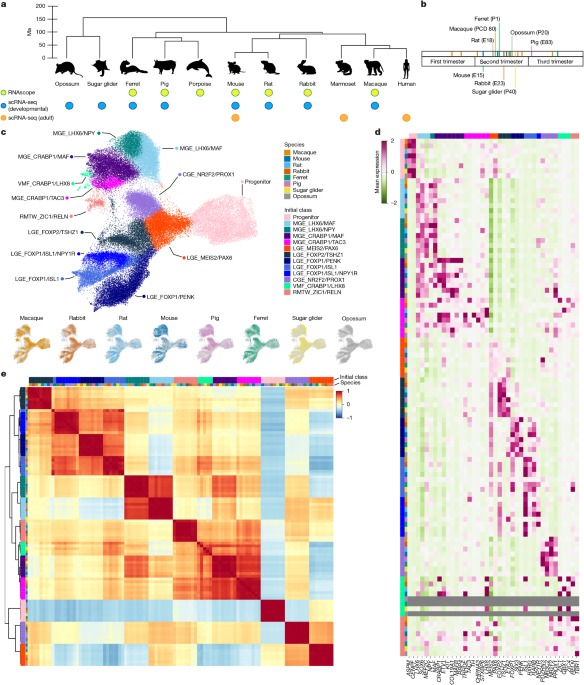
A recent study published in *Nature* provides groundbreaking insights into the diversity of cell types within the mammalian brain, particularly focusing on striatal interneurons. The research, conducted by a team of neuroscientists, analyzed brain samples from various mammalian species, examining both developmental stages and adult forms. One of the key findings of this study is the identification of the TAC3 initial class of striatal interneurons, which has been found to be conserved across placental mammals. This suggests a significant evolutionary relationship among these species, highlighting the importance of these neurons in the functionality of the striatum, a critical region of the brain involved in motor control, reward processing, and various cognitive functions.
The study also draws parallels between the TAC3 interneurons in placental mammals and the Th striatal interneurons found in rodents. This homologous relationship underscores the evolutionary significance of these cell types, suggesting that they play a similar role in the neural circuitry across different mammalian species. By employing advanced techniques such as single-cell RNA sequencing and comparative neuroanatomy, the researchers were able to map out the intricate diversity of cell types within the striatum, revealing both conserved and unique features among species. This research not only enhances our understanding of mammalian brain evolution but also opens new avenues for investigating neurological disorders that may arise from dysfunctions in these specific interneurons, offering potential targets for therapeutic interventions.
Overall, this study serves as a pivotal contribution to the field of neuroscience, emphasizing the importance of understanding cell-type diversity in the context of evolutionary biology. By shedding light on the conserved nature of TAC3 interneurons, the researchers provide a framework for future studies aimed at unraveling the complexities of brain function and the underlying mechanisms of various neurodevelopmental and neurodegenerative diseases. As we continue to explore the vast landscape of brain cell types, this research highlights the interconnectedness of mammalian species and the shared biological heritage that shapes our understanding of brain structure and function.
Nature, Published online: 05 November 2025;
doi:10.1038/s41586-025-09592-w
An analysis of cell-type diversity in brain samples from a variety of mammalian species, both during development and in adult animals, reveals that the TAC3 initial class of striatal interneurons is conserved across placental mammals and is homologous to Th striatal interneurons in rodents.


