November Stargazing: Supermoon number two, meteors galore, and ‘naked’ Saturn.
**November Stargazing: A Celestial Show of Supermoons, Meteor Showers, and a Ringless Saturn**
As we step into November, the night sky promises an enchanting spectacle for stargazers, offering a blend of celestial events that include a Full Beaver Supermoon, two meteor showers, and a rare view of Saturn without its iconic rings. The highlight of the month is undoubtedly the Full Beaver Supermoon, occurring on November 5 at 8:19 a.m. EST. This phenomenon is particularly special as it marks the second of three consecutive supermoons in 2025, with November’s moon being the closest to Earth, thus earning the title of “super supermoon.” The term “supermoon” refers to a full moon that coincides with its perigee, or closest point to Earth, making it appear larger and brighter in the sky. Native American cultures have bestowed various poetic names upon this moon, such as the Cree’s “Rivers Begin to Freeze Moon” and the Haida’s “Bears Sleep Moon,” reflecting the seasonal changes that November brings.
From November 5 through 12, stargazers can also enjoy the Taurids Meteor Shower, which comprises two separate showers: the Northern and Southern Taurids. The Southern Taurids are expected to peak around the same time as the supermoon, although the moon’s brightness may hinder visibility. The Northern Taurids, peaking from November 9 into the early hours of November 12, are likely to provide better viewing opportunities for fireballs, particularly after midnight when the constellation Taurus is high in the sky. Following the Taurids, the Leonids Meteor Shower will peak from November 17 to 19, showcasing fast-moving meteors originating from the constellation Leo. This year, favorable conditions will enhance visibility, as the moon will be a thin crescent, allowing for a clearer view of the shooting stars.
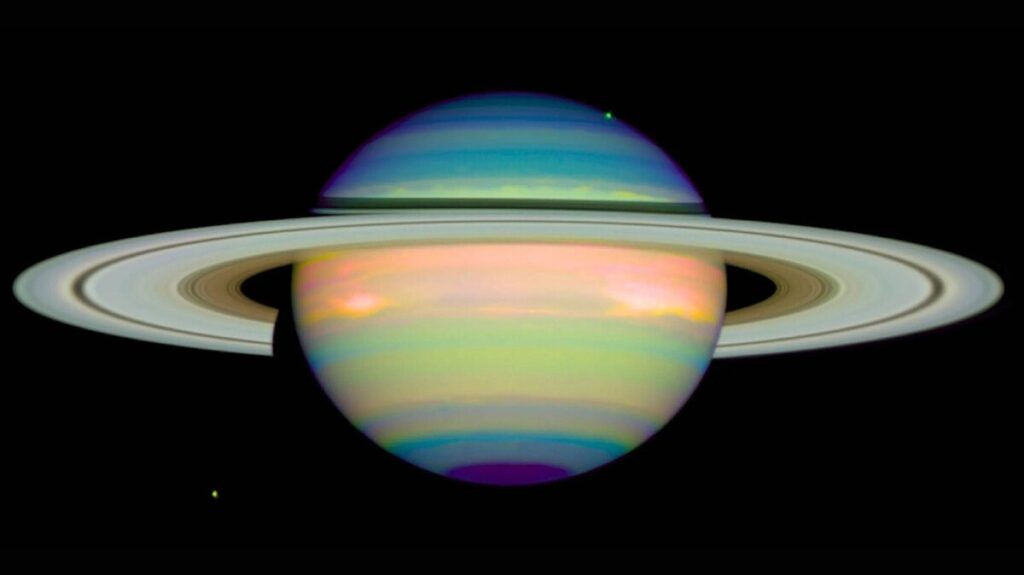
On November 23, Saturn will take center stage as it presents a rare opportunity for observers to see the planet without its stunning rings. This event occurs when Earth aligns perfectly with the plane of Saturn’s ring system, rendering the rings nearly invisible. Stargazers should look towards the south, about 45 degrees above the horizon, to catch a glimpse of Saturn nestled between the constellations Pisces and Aquarius. As you prepare for these celestial events, remember to escape light pollution and allow your eyes to adjust to the darkness for the best viewing experience. With these exciting astronomical occurrences, November is set to be a month of wonder for all who gaze upward.
November 5
Full Beaver Supermoon
November 5 through 12
Taurids Meteor Showers Predicted to Peak
November 17 through 19
Leonids Meteor Shower Predicted Peak
November 23
Saturn Visible Without Rings
A bull, a lion, a beaver and a raving lunatic walk into a bar…This month’s
stargazing
comes with a rich cast of characters, manifesting as two (or three?) separate meteor showers, the most super of moons, and a rare glimpse of
Saturn
without its
most famous accessory
.
November 5: Full Beaver Supermoon
“Full beaver supermoon” is not a combination of words that one encounters often, but this month brings the
second of three consecutive supermoons
. November’s moon also brings our orbital friend closest to us. That makes it a sort of … super supermoon?
An actual genuine
supermoon
—i.e. an exact correspondence between the moon’s full illumination and it being at its closest point to the Earth—is relatively rare. The superlative term is used more generally to describe a full moon where the moon is at or near its perigee, or point where it is closest to Earth. This explains how we have three in a row at the end of 2025, and how, November’s is the
most
super among the trio.
As per the
Farmer’s Almanac
, you can appreciate the full glory of this most super of moons on November 5 at 8:19 a.m. EST. Native American culture provides many
fascinating alternative names
for November’s moon: some particularly poetic monikers include the Cree nations’ “Rivers Begin to Freeze Moon,” the Haida nations’ “Bears Sleep Moon,” and the Hopi nations’ “Fledgling Hawk Moon.”
November 5 through 12: Taurids Meteor Shower(s) Predicted Peak
The annual celestial event referred to as the
Taurids Meteor Shower
is actually two separate showers–the Northern and Southern Taurids. The Northern Taurids originate from the debris shed by an asteroid, referred to as Asteroid 2004 TG10. Meanwhile, the Southern Taurids, come from the trail left by Comet 2P/Encke. The two showers are grouped together because scientists
believe
that both the asteroid and the comet are fragments of a single, much larger object that broke up some 20,000 years ago, leaving a collection of debris known collectively as the Encke Complex.
The
Southern Taurids are predicted to peak around November 5
, but the aforementioned supermoon might make them difficult to see, making their Northern cousins a better bet for fireball spotting.
The peak of the
Northern shower is predicted for the night of November 9
into the early hours of November 12. The radiant point—the point from which meteors appear to originate—is just to the right of the constellation Taurus. As per
NASA
, the best time to look is after midnight, when Taurus is high in the sky.
Both Northern and Southern showers are famous for yielding bright, slow-moving fireballs, and there may be plenty of them on show.
November 17 through 19: Leonids Meteor Shower Predicted Peak
The Taurids aren’t the only meteor shower to see in November. The
Leonids
are also in town, peaking over the course of three days in the middle of the month. The shower’s radiant point is in the
constellation Leo
, the lion—specifically in the lion’s neck,right between the stars Algieba and Rasalas. Leo doesn’t rise until after midnight, but once it does, the nights of November 16 and 17
should provide
plenty of meteors to see.
You’ll have to be sharp-eyed, though.In contrast to the stately Taurids, the Leonids are speedsters, rocketing through the Earth’s atmosphere at hundreds of thousands of miles an hour. They even get a
mention
in the Guinness Book of World Records in the category of “Fastest Meteor Shower”.
Thankfully, this year provides favorable viewing conditions for Leonid-spotting, as it falls a full two weeks after the full moon. The moon will be but a skerrick of a crescent, meaning that its light won’t interfere with the show. Look east,
find the lion in the sky
, and then wish upon a shooting star.
November 23: Saturn Devours Its Rings
There’s no doubt that Saturn’s defining feature is its
glorious rings
. Made almost entirely of water ice, the rings extend out in a startlingly flat plane perpendicular to the planet’s orbital axis. They start 4,300 miles from Saturn and extend out to a distance of 50,000 miles—but they’re barely 30 feet wide at some points,
But this month, the Solar System’s
worst father
is going bare. The Earth has spent much of the year bobbling in the vicinity of the plane of the Saturnian ring system, and on November 23 we’ll be pretty much perfectly aligned with that plane. This means that the rings will be almost invisible. If you look at the planet through a telescope, you might see them only as a thin line—or you might not see them at all, just Saturn laid bare in all his gaseous, filiphagic glory.
To spot it, look to the south and then crane your neck to look about 45° from the horizon.
Saturn will be there
, lurking between the constellations of Pisces and Aquarius.
Whatever you’re looking for in the sky, remember that you’ll get the best experience if you get away from any sources of light pollution and let your eyes acclimatize to the darkness—
and
you check out our
stargazing tips
before you head off into the night.
Until next month!
The post
November Stargazing: Supermoon number two, meteors galore, and ‘naked’ Saturn.
appeared first on
Popular Science
.


