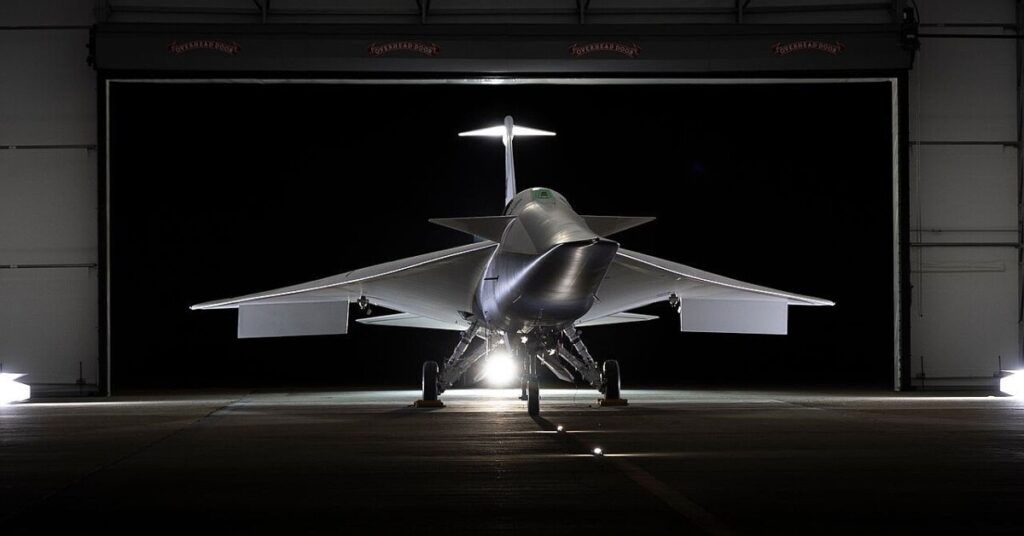
NASA’s Quiet Supersonic Jet Takes Flight
The X-59 QueSST (Quiet Supersonic Technology) has marked a significant milestone in aviation history by successfully completing its inaugural flight. This groundbreaking aircraft, developed by NASA in collaboration with Lockheed Martin, aims to revolutionize air travel by enabling supersonic flight without the disruptive sonic booms that have historically plagued such speeds. The successful flight is a crucial step toward the future of quieter supersonic jets, which could potentially transport passengers at speeds exceeding twice that of current commercial airliners, drastically reducing travel times across long distances.
The X-59’s design incorporates innovative technologies that allow it to fly at supersonic speeds while minimizing noise pollution. Unlike traditional supersonic jets, which produce loud sonic booms that can be disruptive and even damaging to communities below, the X-59 is engineered to create a quieter “sonic thump.” This is achieved through its unique shape and advanced aerodynamics, which help to mitigate the shock waves generated during flight. During its inaugural flight, the X-59 reached altitudes and speeds that are critical for testing its noise-reduction capabilities. NASA plans to gather extensive data during these flights to support future regulatory changes that could allow supersonic passenger travel over land, a market that has been largely dormant since the Concorde was retired in 2003.
The implications of successful supersonic travel are immense, particularly for international travel. For example, a flight from New York to London, which currently takes around seven hours, could be reduced to just over three hours with supersonic jets like the X-59. This could open up new opportunities for business and tourism, making distant locations more accessible than ever before. As the aviation industry continues to recover and evolve post-pandemic, the development of quieter supersonic technologies could play a pivotal role in reshaping the future of air travel, offering a blend of speed, efficiency, and reduced environmental impact. With the X-59’s successful flight, NASA and its partners are one step closer to making this vision a reality, paving the way for a new era of aviation that could redefine how we think about distance and time in travel.
Related articles:
– Link 1
– Link 2
The X-59 successfully completed its inaugural flight—a step toward developing quieter supersonic jets that could one day fly customers more than twice as fast as commercial airliners.